
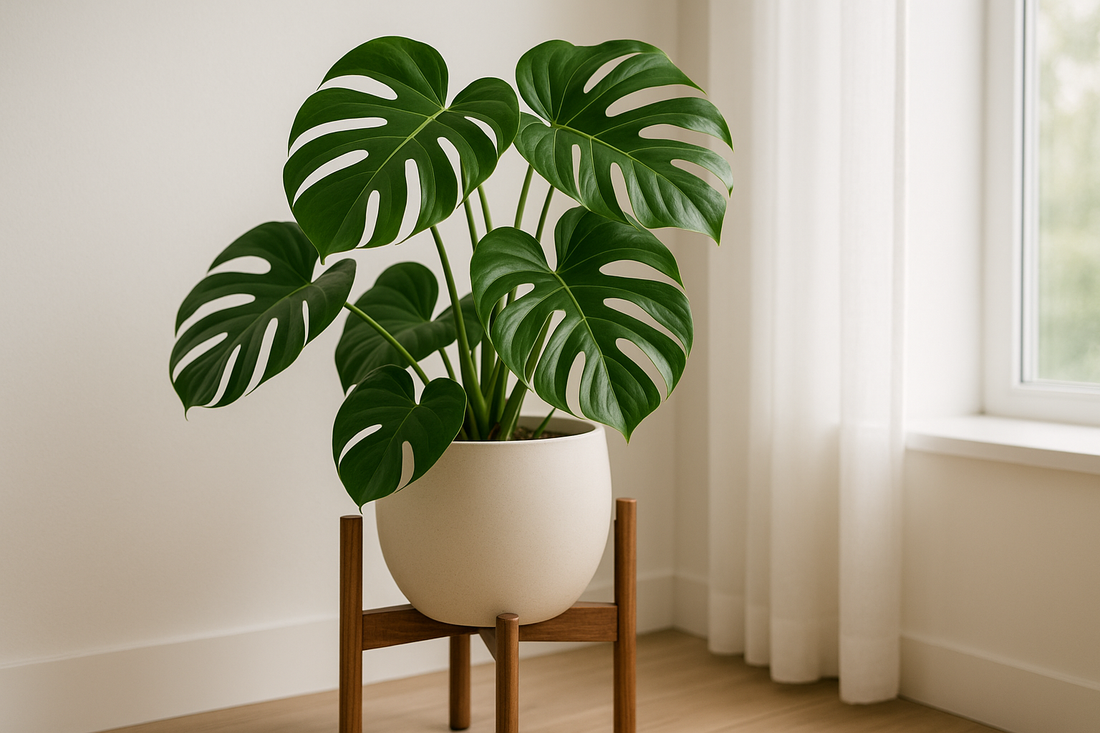
Why Doesn’t My Monstera Have Holes? Causes and Fenestration Tips
Quick answer: A Monstera without holes or splits is usually young, growing in insufficient light, producing smaller juvenile leaves, or not climbing. Fenestrations develop as the plant matures and produces larger leaves under stronger growing conditions; there is no exact age when every Monstera begins to split.
Affiliate disclosure: As an Amazon Associate I earn from qualifying purchases.
Helpful tools for encouraging stronger Monstera growth
- SANSI BR30 36W LED Grow Light Bulb (paid link)
- XLUX T10 Soil Moisture Meter (paid link)
- SUPERthrive Foliage-Pro 9-3-6 (paid link)
1. Your Monstera may still be juvenile
Young Monstera deliciosa plants naturally produce solid, heart-shaped leaves. As the plant matures and the leaves become larger, new leaves are more likely to develop splits and internal holes. A healthy juvenile plant with solid leaves is not automatically a problem.
2. It may not be getting enough light
Light is one of the biggest factors affecting leaf size and maturity. A Monstera can survive in relatively low light while still producing smaller, less fenestrated leaves. Give it bright indirect light and avoid abruptly moving a shade-grown plant into harsh direct sun.
See our bright indirect light guide if you are unsure how to evaluate a room.
3. The plant is not climbing
Monstera are climbing plants. As they attach to a support and grow upward, they often begin producing larger, more mature foliage. A moss pole, plank, or other sturdy support can help encourage a more mature growth habit.
4. The plant is stressed
Plants dealing with root problems, repeated drought, severe overwatering, pests, or temperature stress may prioritize survival instead of producing large mature leaves.
If you are seeing yellowing as well, read Why Are My Monstera Leaves Turning Yellow?.
5. The root zone may be limiting growth
Very compacted soil, damaged roots, or an extremely root-bound plant can slow growth. Use a well-aerated mix and repot when the plant clearly needs more root space rather than moving it into an oversized container.
See Best Soil for Monstera Plants.
6. New leaves need time to mature
Do not judge a newly unfurled leaf immediately. New Monstera leaves emerge soft and continue hardening after they open. Fenestrations themselves are already formed when the leaf unfurls, but the size and shape of the leaf become easier to evaluate once it hardens.
How to encourage Monstera fenestrations
- Provide bright indirect light.
- Give the plant a stable vertical support.
- Keep watering consistent without leaving the soil saturated.
- Use an airy, well-draining potting mix.
- Feed a healthy actively growing plant according to fertilizer directions.
- Allow time for the plant to mature.
Monstera fenestration FAQ
At what age does a Monstera get holes?
There is no reliable universal age. Genetics, light, maturity, climbing support, root health, and overall growing conditions all influence when fenestrations appear.
Do all Monstera leaves eventually get holes?
No. Even mature plants can produce leaves with different levels of fenestration depending on the growing conditions and position on the plant.
Can low light stop Monstera leaves from splitting?
Low light can contribute to smaller juvenile growth, which often has fewer or no fenestrations.
Should I cut holes into a Monstera leaf?
No. Cutting a leaf only damages it and does not encourage future fenestration.
What is the difference between Monstera deliciosa and Monstera adansonii?
Both can produce fenestrated leaves, but their growth habits and leaf shapes differ. Monstera adansonii typically develops smaller leaves with internal holes, while mature Monstera deliciosa can produce much larger leaves with both splits and internal fenestrations.